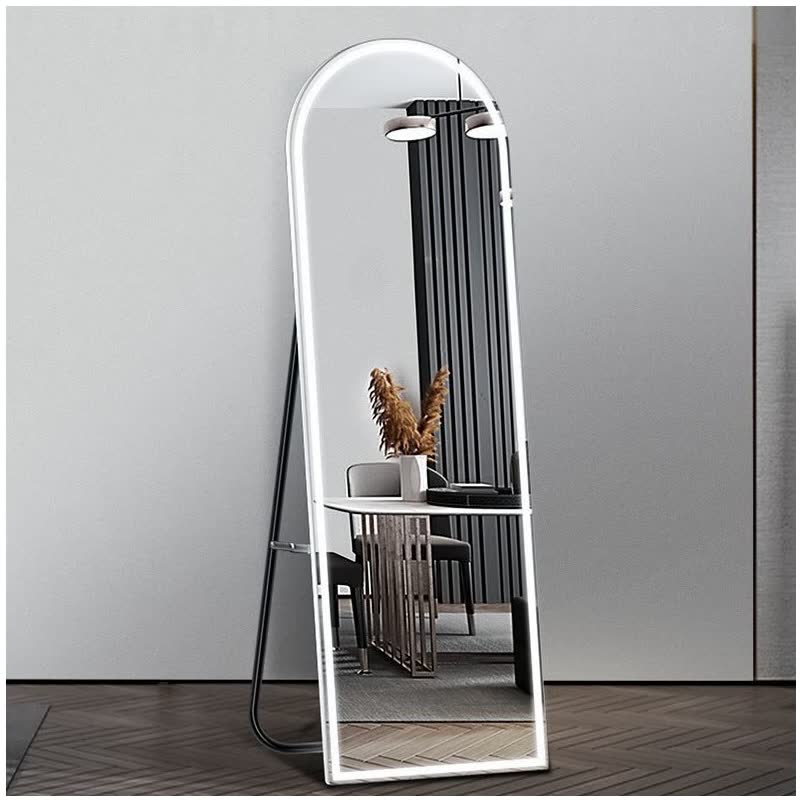
JIEPAI HOME, a Global Leading Floor Mirror Company: Sample Support and After-Sales Assistance
YIWU, ZHEJIANG, CHINA, October 26, 2026 /EINPresswire.com/ -- Container-scale procurement of freestanding dressing mirrors requires auditing structural easel stability, optical reflection flatness, and transit packaging survivability. Furniture retail merchandisers and contract procurement directors evaluating a Global Leading Floor Mirror Company focus on prototype validation and post-delivery supplier responsiveness. Sourcing through JIEPAI HOME enables trade buyers to inspect physical prototypes, verify frame finishes, and establish clear quality benchmarks before issuing purchase orders. Establishing rigorous pre-shipment sampling protocols safeguards volume distribution channels against freight damage and retail return rates. Reliable manufacturer collaboration provides transparent communication, dependable warranty assistance, and long-term supply chain security for international furniture brands.
How a Floor Mirror Company Uses Samples Before Bulk Ordering
Pre-production sampling for commercial freestanding floor mirrors enables retail merchandisers to audit easel hinge friction torque, optical reflection flatness, and transit packaging survivability before container manufacturing. Evaluating physical mockups against ANSI Z97.1 shatterproof safety standards and ISTA drop-testing protocols eliminates maritime freight transit damage and retail return liabilities. Full-length mirrors present high volumetric weight ratios in ocean freight containers. Sourcing managers analyze pallet stackability and master carton gross weights to optimize container payload limits without exceeding port axle load regulations.
At JIEPAI HOME, prototype evaluation creates an empirical quality baseline between the factory and commercial buyers. Sourcing teams inspect glass optical flatness, measure corner miter seam tightness, verify easel stand torque, and test packaging cushioning. This hands-on evaluation eliminates ambiguity and establishes verifiable inspection standards for subsequent container shipments. Laser collimator audits scan the reflective glass surface to measure focal flatness. Sourcing teams confirm that reflected grid lines remain perfectly straight across the entire vertical span, verifying zero optical wave distortion at retail display angles.
Freestanding center-of-gravity engineering is audited on physical prototypes. Engineers measure the easel stand stance to ensure tip resistance on commercial carpets up to a fifteen-degree lateral tilt. Sourcing teams verify that the reverse face features an explosion-proof vinyl safety backing meeting ANSI Z97.1 Category II standards. The adhesive film ensures glass fragments remain bonded if severe impact occurs. Friction-torque hinges maintain their set resistance without drooping under mirror self-weight. To guarantee tip-over stability, tubular easel kickstands incorporate high-tensile limit straps fixed at a fifteen to twenty-degree recline angle, preventing accidental forward collapse on polished hardwood or marble floors.
A Mirror Sample Helps Align Size, Frame and Style Expectations
Full-length floor mirrors serve both daily personal dressing functions and retail room merchandising. Auditing physical samples confirms that proportions and frame finishes match regional market expectations.
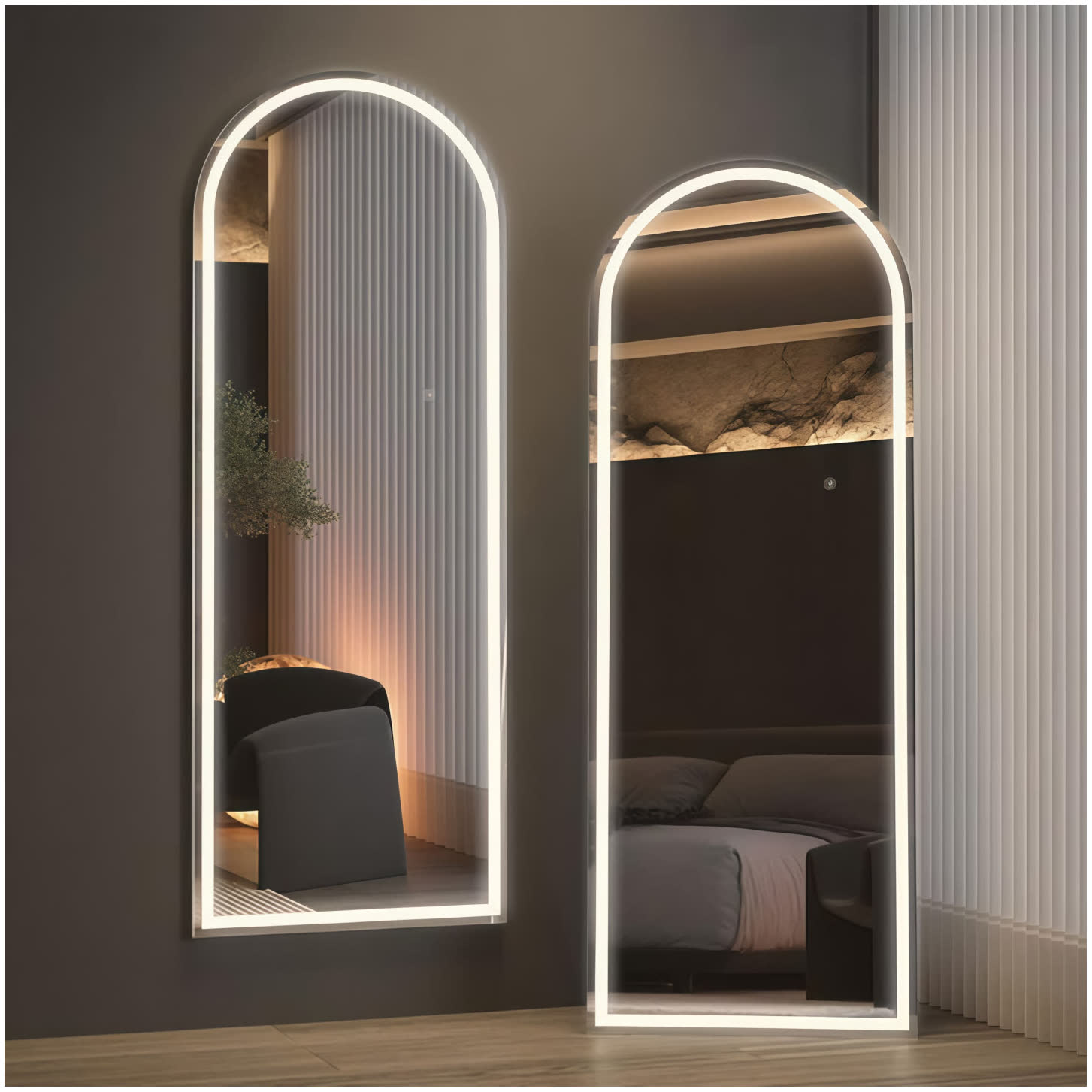
JIEPAI HOME standardizes full-length mirror production around versatile freestanding formats tailored to diverse room layouts. Physical sample reviews allow furniture buyers to confirm spatial proportions in living environments. Merchandisers evaluate whether compact dimensions satisfy urban apartments or if larger expansive glass formats are required for high-end furniture retail showrooms.
Sample inspection allows category managers to evaluate metal frame fabrication. Sourcing teams inspect extruded aluminum and formed iron profiles for flawless miter joinery with corner gaps under 0.3 mm. Friction-torque easel hinges undergo cycle testing rated for 10,000 opening and closing actions, while braided stainless steel tether cables restrict leg spread to an exact 25 cm opening angle. The lower frame legs incorporate non-skid thermoplastic rubber foot inserts secured with recessed machine screws. These protective foot glides prevent floor marring on polished hardwood surfaces and stop lateral sliding on glazed porcelain floor tiles.
Model Selection and Customization Keep the Assortment Brief Focused
Clear technical specifications connect retail merchandising goals with factory production lines. Establishing frame alloys, glass thickness, and packaging standards early prevents misunderstandings during volume production.
JIEPAI HOME supports commercial customization on full-length floor mirrors. Retailers can select bespoke frame colors, including matte black, brushed champagne, and gunmetal gray. Packaging engineers design four-color retail display sleeves with scannable UPC barcodes and internal high-density foam edge guards designed for big-box department store racking. For e-commerce retail distribution, packaged units undergo ISTA-3A package integrity evaluations. Testing protocols include sequential mechanical drops onto concrete floors, dynamic rotational edge impacts, and atmospheric humidity conditioning to simulate cross-country courier transit.
After-Sales Assistance Extends the Supplier Relationship Beyond Selection
Long-term commercial supply relationships depend on responsive after-sales protocols that address transit risks and replacement parts. International glass shipping requires defined procedures for handling transit damage claims.
JIEPAI HOME provides structured after-sales technical assistance to wholesale partners. Sourcing contracts incorporate a standardized 48-hour photographic claim assessment workflow for maritime transit damage. Master containers include a one percent spare parts allotment containing replacement easel hinges, rubber floor bumpers, and mounting brackets to ensure uninterrupted retail inventory support. Digital claim portals allow distributors to upload container outturn photos and bill-of-lading records directly. Factory claim managers review structural damage patterns to determine whether transit impacts exceeded package g-force limits, authorizing replacement unit credits within two business days.
Factory logistics specialists analyze container packing efficiency, utilizing palletized stowage and corner angle boards to eliminate container sway damage during intermodal ocean transport. Packaging configurations undergo ISTA-2A transit simulation tests combining rotational edge drops and random vibration profiling.
Frequently Asked Questions about Floor Mirror Samples and Support
Why Request a Mirror Sample Before a Larger Order?
Sample evaluation provides a tangible quality benchmark for glass flatness, metal frame joinery, finish texture, and drop-test packaging performance prior to committing capital to volume container manufacturing.
Which Product Details Can Buyers Compare in a Full-Length Mirror Sample?
Buyers compare glass optical purity, reflection distortion, aluminum corner miter tightness, powder-coat adhesion, easel bracket stability, and shipping carton foam density.
How Does Model Selection Support Customization?
Model selection establishes a defined base frame profile and glass dimension, allowing customization to focus on specific finish colors, branding, backing films, and retail packaging formats.
How Does After-Sales Assistance Fit the Sourcing Relationship?
After-sales support provides formal freight damage claim reviews, packaging optimization based on transit data, and replacement hardware support to protect wholesale distribution margins.
What Should a Distributor Include in a Floor Mirror Inquiry?
Inquiries should specify target dimensions, frame alloy and finish, glass thickness, packaging requirements (retail or e-commerce drop-ship), and projected container volume.
Start the Floor Mirror Discussion with the Required Model Brief
Commercial floor mirror procurement succeeds when structural stability, optical safety backing, and dependable warranty support are verified prior to mass production. Establishing clear technical parameters early protects retailer profit margins and supply chain continuity.
Furniture retail merchandisers and commercial purchasing managers can provide target frame specifications through the JIEPAI HOME storefront to arrange prototype dispatches, retail packaging die-lines, and after-sales terms.
JIEPAI HOME
JIEPAI HOME
Legal Disclaimer:
EIN Presswire provides this news content "as is" without warranty of any kind. We do not accept any responsibility or liability for the accuracy, content, images, videos, licenses, completeness, legality, or reliability of the information contained in this article. If you have any complaints or copyright issues related to this article, kindly contact the author above.