

LJF Advances Nonwoven Pocket Filter Media Roll Solutions for Global Filtration Markets
As commercial buildings, industrial facilities, and ventilation systems place increasing emphasis on air quality and operational efficiency, selecting suitable filtration materials has become an important consideration for HVAC manufacturers and filter producers. For companies searching for a Best Nonwoven Pocket Filter Media Roll Supplier China, material consistency, filtration performance, manufacturing capacity, and customization options are key factors in supplier evaluation. LJF, an air filtration manufacturer based in Guangzhou, China, supplies nonwoven pocket filter media rolls and medium pocket filters for general ventilation and industrial air filtration applications.
Guangzhou LJF Air Purification Equipment Co., Ltd. operates across multiple stages of air filter production, including filter media processing, frame manufacturing, finished filter assembly, and product inspection. According to its company profile, this integrated manufacturing model helps the company maintain quality consistency, respond to customized requirements, and coordinate production and delivery for customers in international markets.
The company's product portfolio includes pocket filters, panel filters, HEPA filters, spray booth filters, and various filter media products. By supplying both raw materials and finished filtration products, LJF serves filter fabricators, distributors, equipment manufacturers, and industrial customers seeking solutions for different ventilation requirements.
Multilayer Nonwoven Materials Support Particle Filtration
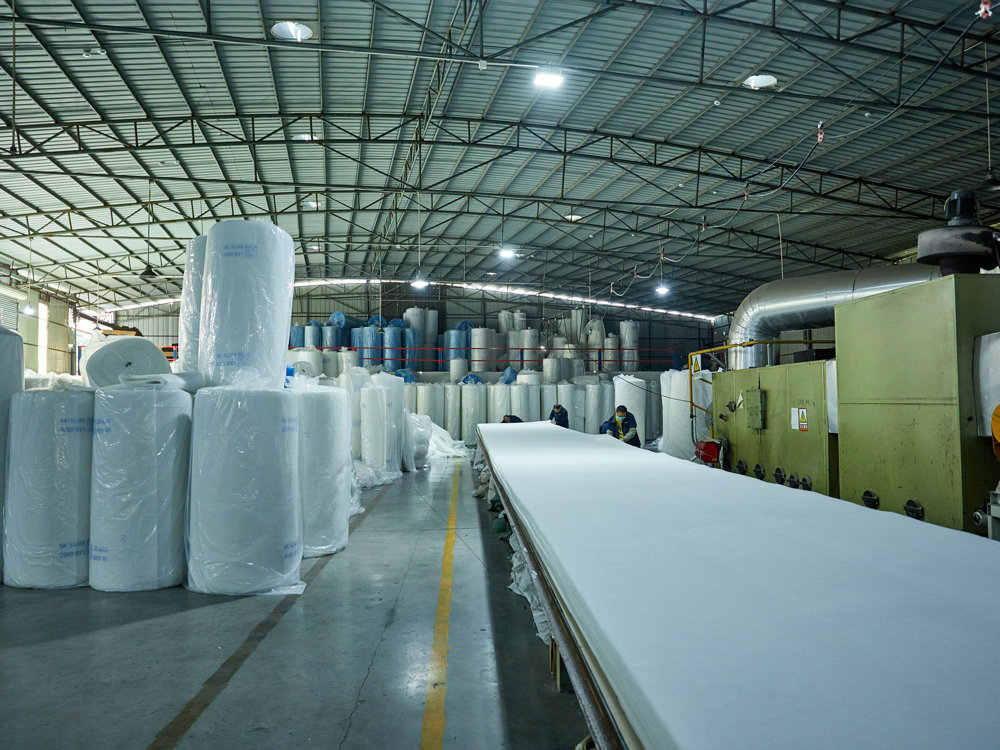
Nonwoven pocket filter media rolls are important raw materials for manufacturing bag filters and certain rigid panel filters used in HVAC systems. Unlike woven fabrics, nonwoven materials consist of fibers arranged and bonded into a functional structure. The resulting fiber network can provide multiple pathways for airflow while capturing airborne particles as air passes through the media.
LJF's product information identifies polypropylene (PP) and polyester fiber (PET) as materials used in its nonwoven pocket filter media. Its multilayer composite structure incorporates a three-dimensional fiber network designed to support graded filtration. This arrangement allows particles to be captured at different depths within the media, rather than depending entirely on surface filtration.
For filter manufacturers, the structure of the media influences filtration efficiency, airflow resistance, dust accumulation, and the performance of the finished filter. Material selection should therefore consider the intended application and the operating conditions of the ventilation system.
Different installations may require different filtration grades and physical characteristics. Commercial buildings, industrial workshops, and air handling units can have varying airflow rates and particle loads. Choosing an appropriate nonwoven material helps manufacturers align the properties of the finished filter with the requirements of the installation.
Airflow Resistance and Dust-Holding Capacity Affect Operating Performance
Airflow resistance is an important parameter when evaluating filter media for HVAC applications. A filter introduces resistance as air passes through its fiber structure, and the pressure drop can increase as dust accumulates. Excessive resistance may increase the energy required to maintain a specified airflow, depending on the fan and system design.
LJF identifies low initial resistance and high dust-holding capacity as key characteristics of its pocket filter media roll. Low initial resistance can help support airflow through a clean filter, while sufficient dust-holding capacity can allow the media to retain accumulated particles during operation.
These characteristics are particularly relevant for ventilation systems that operate for extended periods. Depending on environmental conditions and maintenance practices, a filter with suitable dust-holding characteristics may help reduce replacement frequency and associated maintenance work.
However, actual energy consumption and service life depend on several factors, including airflow volume, particle concentration, filter dimensions, filtration efficiency, and the pressure-drop limit established for replacement. Buyers should compare technical data under equivalent test conditions rather than relying solely on general performance descriptions.
For filter fabricators and distributors, evaluating these parameters can help balance material costs against the operating requirements of the finished product.
Medium Pocket Filters Address Different Filtration Requirements
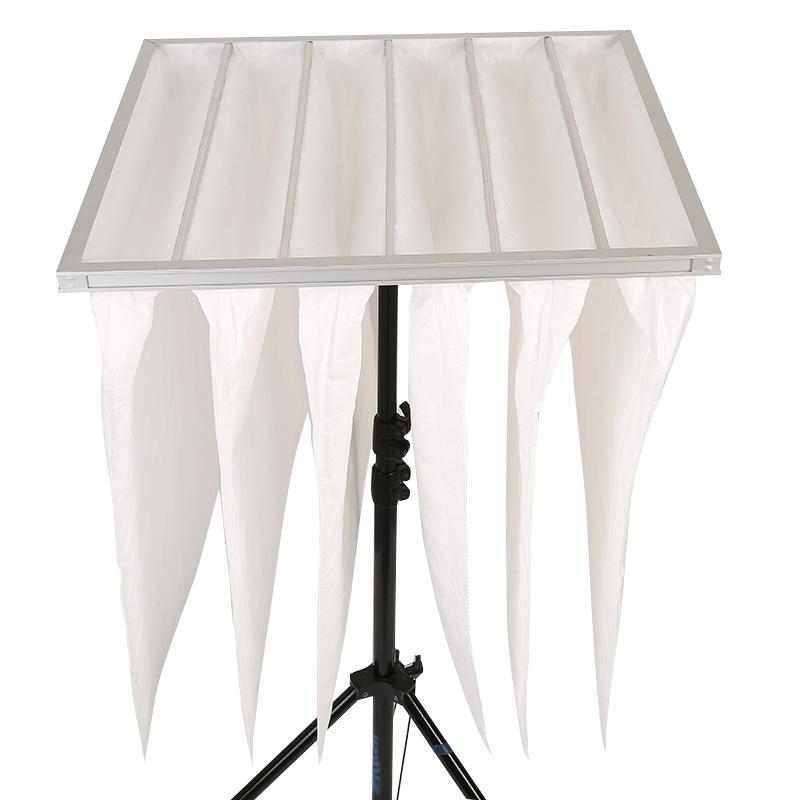
In addition to media rolls, LJF supplies medium pocket filters for ventilation and air handling applications. These filters use extended pockets to provide filtration surface area within a compact frame, making them suitable for installations where intermediate filtration is required.
The company's medium pocket filter product range includes models identified as F6/M6, F7/M7, and F9/M9. Its product listings also feature synthetic pocket filters and nonwoven pocket filter media rolls. These options provide buyers with different supply formats, depending on whether they manufacture finished filters or purchase assembled units for installation.
Medium pocket filters are used in a range of commercial and industrial ventilation systems, including air handling units and general HVAC installations. The appropriate model depends on the required filtration classification, airflow, available installation space, and the characteristics of the airborne particles.
It is important to distinguish between purchasing raw media and purchasing completed filters. Media rolls are intended for processing into finished products, while assembled pocket filters are ready for integration into compatible systems. Confirming the required format, dimensions, and performance specifications before ordering can reduce procurement errors and production delays.
Integrated Manufacturing Enables Flexible Customization
Product standardization is useful for many applications, but filter manufacturers and equipment suppliers often require customized specifications. Roll widths, material composition, filtration grades, and finished filter dimensions may need to match existing production equipment or particular ventilation systems.
LJF reports providing OEM and ODM services for customers requiring customized filtration products. Its integrated production model covers filter media processing, frame manufacturing, assembly, and inspection, helping coordinate manufacturing requirements across different stages.
For nonwoven pocket filter media rolls, buyers should confirm the required material, roll width, filtration performance, packaging, and compatibility with their manufacturing processes. For finished pocket filters, additional specifications may include frame dimensions, pocket quantity, installation configuration, and rated airflow.
Providing detailed technical requirements at the beginning of a project can help reduce misunderstandings and improve production consistency. Where necessary, buyers can supply drawings, samples, or written specifications for review before confirming an order.
LJF also reports supporting factory-direct supply and flexible minimum order quantities. These arrangements may be useful for businesses evaluating a new supplier, testing material compatibility, or gradually expanding procurement volumes. Actual order quantities, lead times, and customization conditions should be confirmed for each project.
Quality Management Supports International Procurement
Consistent product quality is essential for filtration materials used in commercial and industrial ventilation systems. Variations in fiber structure, dimensions, or production conditions can affect downstream processing and finished filter performance.
According to its company profile, LJF operates an ISO 9001 quality management system. The company also references standards and requirements such as CE, RoHS, EN 779, and ISO 16890, depending on the product and application. Buyers should verify the relevant documentation and applicable test methods for the specific product being sourced.
LJF states that it serves more than 3,000 customers across over 30 countries and regions, including distributors, equipment manufacturers, and industrial customers. Its product range covers multiple filtration categories, enabling buyers to evaluate different products through one supplier.
For international procurement teams, supplier assessment should consider more than price. Material specifications, quality documentation, communication, packaging, production scheduling, and shipping arrangements can all influence the reliability of a long-term supply relationship.
LJF's location in Guangzhou, China, provides access to international freight networks. The company also describes its manufacturing and packaging capabilities as part of its approach to coordinating orders for overseas customers.
Supporting Global Filtration Markets Through Product Development
The demand for practical air filtration solutions continues to create opportunities for manufacturers of nonwoven media and finished filters. For filter producers, the main challenge is to balance particle capture, airflow resistance, dust-holding capacity, and manufacturing requirements while maintaining consistent product quality.
LJF's nonwoven pocket filter media rolls are designed for manufacturers producing pocket filters and certain panel filters for general ventilation. Its wider portfolio of medium pocket filters and other air filtration products allows the company to serve customers seeking either raw materials or finished filtration components.
By combining integrated manufacturing, customization services, and quality management, LJF provides international buyers with several factors to evaluate when selecting an air filtration supplier. The most suitable product ultimately depends on the intended application, documented technical performance, and compatibility with the customer's equipment or manufacturing process.
For distributors, HVAC manufacturers, and filter fabricators, confirming specifications and reviewing relevant product documentation remain essential steps toward establishing a dependable supply relationship.
For more information about LJF's nonwoven pocket filter media rolls, medium pocket filters, and other air filtration products, visit the official website:
https://www.ljfairfilter.com/
Guangzhou LJF Air Purification Equipment Co., Ltd.
Guangzhou LJF Air Purification Equipment Co., Ltd.
+ +8613928756796
gzairfilter@gmail.com
Legal Disclaimer:
EIN Presswire provides this news content "as is" without warranty of any kind. We do not accept any responsibility or liability for the accuracy, content, images, videos, licenses, completeness, legality, or reliability of the information contained in this article. If you have any complaints or copyright issues related to this article, kindly contact the author above.
